
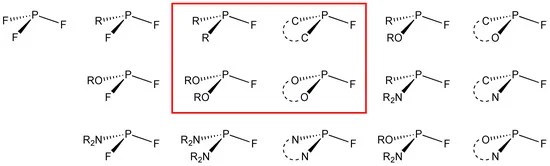
Monofluorophos-Metal Complexes: Ripe for Future Discoveries In Homogeneous Catalysis
Alexandra M. Miles-Hobbs, Paul G. Pringle, J. Derek Woollins and Daniel Good
Versatile Diphosphine Chelators for Radiolabeling Peptides with 99mTc and 64 Cu
, Truc Thuy Pham, Charlotte Rivas, James A. Jarvis, Rachel E. Nuttall, Saul M. Cooper, Jennifer D. Young, Philip J. Blower, Paul G. Pringle and Michelle T. Ma

Diphosphine Bioconjugates via Pt(0)-Catalyzed Hydrophosphination. A Versatile Chelator Platform for Technetium-99m and Rhenium-188 Radiolabeling of Biomolecules
Rachel E. Nuttall, Truc Thuy Pham, Ailis C. Chadwick, , George Firth, Martin A. Heckenast, Hazel A. Sparkes, M. Carmen Galan, Michelle T. Ma, and Paul G. Pringle

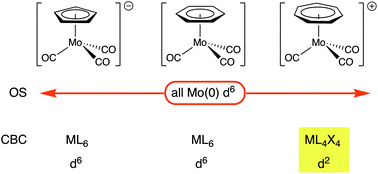
In defence of oxidation states
Nicholas C. Norman and Paul. G. Pringle
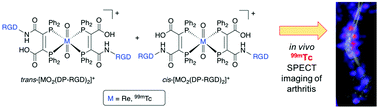
One-step, kit-based radiopharmaceuticals for molecular SPECT imaging: a versatile diphosphine chelator for 99mTc radiolabelling of peptides
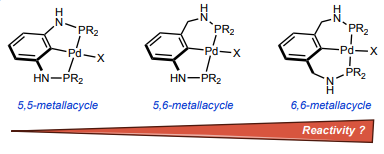
Pd-pincer complexes containing six-membered rings that are more active allylation catalysts than five-membered ring analogues
Dan Wise, Natalie Pridmore, Paul Pringle
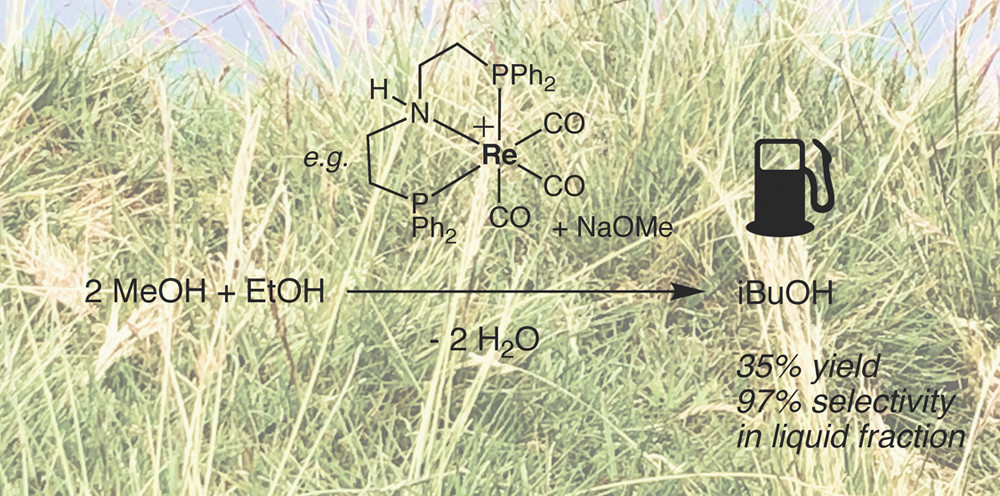
Rhenium Complexes Bearing Tridentate and Bidentate Phosphinoamine Ligands in the Production of Biofuel Alcohols via the Guerbet Reaction
Ashley M. King, Richard L. Wingad, Natalie E. Pridmore, Paul G. Pringle and Duncan F. Wass
Organometallics, 2021, ASAP Article
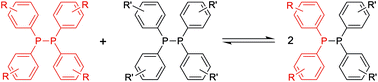
Radical-initiated P,P-metathesis reactions of diphosphanes: evidence from experimental and computational studies
Callum Branfoot, Tom A. Young, Duncan F. Wass, Paul G. Pringle
Dalton Trans., 2021, Advance Article
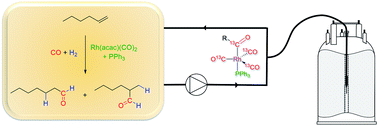
Multi-nuclear, high-pressure, operando FlowNMR spectroscopic study of Rh/PPh3 – catalysed hydroformylation of 1-hexene
Faraday Discuss., 2021, Advance Article
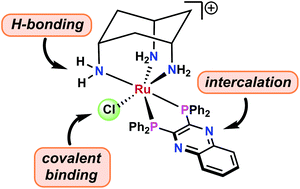
Cytotoxic (cis,cis-1,3,5-triaminocyclohexane)ruthenium(II)-diphosphine complexes; evidence for covalent binding and intercalation with DNA
Dan E. Wise, Aimee J. Gamble, Sham W. Arkawazi, Paul H. Walton, M. Carmen Galan, Michael P. O’Hagan, Karen G. Hogg, Joanne L. Marrison, Peter J. O’Toole, Hazel A. Sparkes, Jason M. Lynam, Paul G. Pringle
Dalton Trans., 2020,49, 15219-15230
Transition Metal Cooperative Lewis Pairs Using Platinum(0) Diphosphine Monocarbonyl Complexes as Lewis bases
Krishna Mistry, Paul G. Pringle, Hazel A. Sparkes, Duncan F. Wass
Organometallics, 2020, 39, 3, 468–477

Self-Replication of Chelating Diphosphines via Pt(0)-Catalyzed Hydrophosphination
Ailis C. Chadwick, Martin A. Heckenast, James J. Race, Paul G. Pringle, Hazel A. Sparkes
Organometallics, 2019, 38, 19, 3871–3879

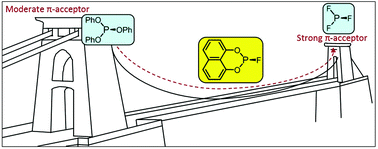
Ring size effects in cyclic fluorophosphites: ligands that span the bonding space between phosphites and PF3
Alexandra M. Miles-Hobbs, Eliza Hunt, Paul G. Pringle, Hazel A Sparkes.
Dalton Trans., 2019,48, 9712-9724
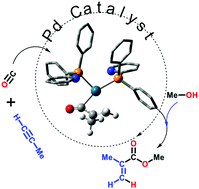
Palladium-catalysed alkyne alkoxycarbonylation with P,N-chelating ligands revisted: a density functional theory study
Shabhaz Ahmad, Ashley Lockett, Timonthy A. Shuttleworth, Alexandra M. Miles-Hobbs, Paul G. Pringle and Michael Bühl
Phys. Chem. Chem. Phys., 2019, 21, 8543-8552
Phosphophosphidites Derived from BINOL
Adam. D. Gorman, Jessica A. Cross, Rachel A. Doyle, Tom R. Leonard, Paul G. Pringle, Hazel A. Sparkes
Eur. J. Inorg. Chem., 2019, 1633-1639.

Inorganic Triphenylphosphine
Adam D. Gorman, Jonathan A. Bailey, Natalie Fey, Tom A. Young, Hazel A. Sparkes, Paul G. Pringle
Angew. Chem. Int. Ed., 2018, 57, 15802-15806.

Pyrrolidines and Piperidines by Ligand-Enabled Aza-Heck Cylizations and Cascades of N-(Pentafluorobenzoyloxy)carbamates
Ian R. Hazelden, Rafaela C. Carmona, Thomas Langer, Paul G. Pringle and John F. Bower
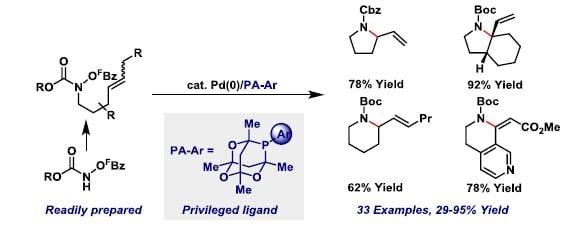
Angew. Chem. Int. Ed., 2018, 57, 5124-5128.
Spin changes accompany ultrafast structural interconversion in the ground state of a colbalt nitrosyl complex
Hugo J. B. Marroux, Basile F. E. Curchod, Charly A. Faradji, Timothy A. Shuttleworth, Hazel A. Sparkes, Paul G. Pringle and Andrew J. Orr-Ewing
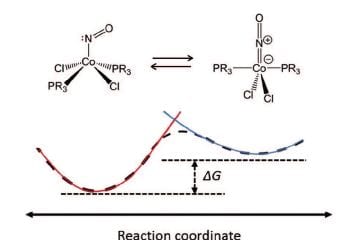
Angew. Chem. Int. Ed., 2017, 56, 13713-13716
2-Pyridyl substituents enhance the activity of palladium-phospha-adamantane catalysts for the methoxycarbonylation of phenylacetylene
Timothy A. Shuttleworth, Alexandra M. Miles-Hobbs, Paul G. Pringle and Hazel A. Sparkes
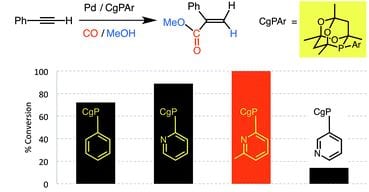
Dalton Trans., 2017, 46, 125-137.
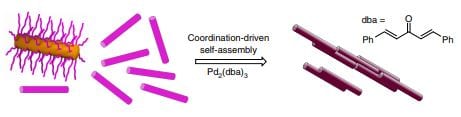
Microfibres and macroscopic films from the coordination-driven hierarchical self-assembly of cylindrical micelles
David J. Lunn, Oliver E. C. Gould, George R. Whittell, Daniel P. Armstrong, Kenneth P. Mineart, Mitchell A. Winnik, Richard J. Spontak, Paul G. Pringle and Ian Manners.
Aminophobanes: hydrolytic stability, tautomerism and application in Cr-catalysed ethene oligomerisation
Mairi F. Haddow, Judit Jaltai, Martin Hanton, Paul G. Pringle Laura E. Rush, Hazel A. Sparkes, Christopher H. Woodall
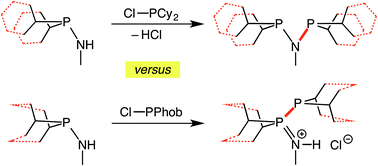
Dalton Trans., 2016, 45, 2294-2307
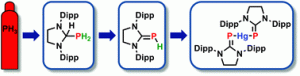
Carbene insertion into a P-H bond: parent phosphinidene-carbene adducts from PH3 and bis(phosphinidene) mercury complexes
Mark Bispinghoff, Aaron M. Tondreau, Hansjörg Grützmacher, Charly A. Faradji, Paul G. Pringle
Dalton Trans., 2016,45, 5999-6003
Subtle effects of ligand backbone on the efficiency of iron-diphos catalysed Negishi cross-coupling reactions
Jamie Clifton, Evi R. M. Habraken, Ian Manners, Paul G. Pringle
Catal, Sci. Technol. 2015, 5, 4350-4353.
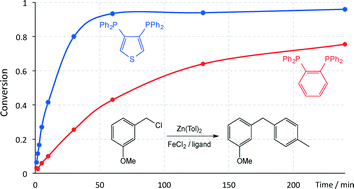
One-step Modular route to optically active diphos ligands
E. Louise Hazeland, Andy M. Chapman, Paul G. Pringle,
Hazel A. Sparkes
Chem. Commun, 2015, 10206-10209.
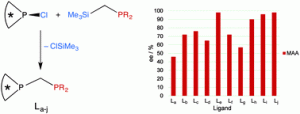
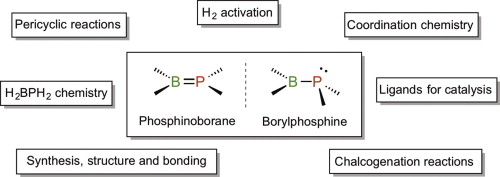
Monomeric Phosphinoboranes
Jonathan A. Bailey, Paul G. Pringle
Coord. Chem. Rev, 2015, 297-298, 77-90.
Single Oxygen-Atom Insertion into P-B Bonds: On- and Off-Metal Transformation of a Borylphosphine into a Borylphosphinite
Jonathan A. Bailey, Hazel A. Sparkes, Paul G. Pringle
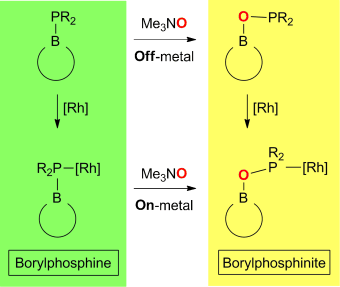
Chem. Eur. J., 2015, 21, 5360-5363.
Cooperative Lewis Pairs Based on Late Transition Metals: Activation of Small Molecules by Platinum(0) and B(C6F5)3
Sebastian J. K. Forrest, Jamie Clifton, Natalie Fey, Paul G. Pringle, Hazel A. Sparkes, Duncan F. Wass

Angew. Chem. Int. Ed,, 2015, 54, 2223-2227
Setting P-Donor Ligands into Context: An Application of the Ligand Knowledge Base (LKB) Approach
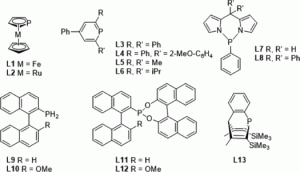
Natalie Fey, Sofia Papadouli, Paul G. Pringle, Arne Ficks, James T. Fleming, Lee J. Higham, Jennifer F. Wallis, Duncan Carmichael, Nicolas Mézailles, Christian Müller
Phosphorus, Sulfur Silicon Relat. Elem., 2015, 190, 706-714.
Reversible CO Exchange at Platinum(0). An Example of Similar Complex Properties Produced by Ligands with Very Different Stereoelectronic Characteristics

Paul G Pringle, Sebastian Forrest, Hazel Sparkes, Duncan Wass
Dalton Trans., 2014, 43, 16335-16344.
Computational Kinetics of Cobalt-Catalyzed Alkene Hydroformylation
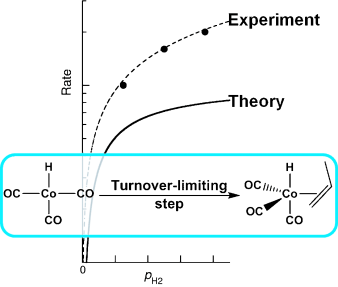
Laura E. Rush, Paul G. Pringle, Jeremy N. Harvey
Angew. Chem. Int. Ed. 2014, 53, 8672–8676.
Mono-, Di-, and Triborylphosphine Analogues of Triarylphosphines

Jonathan A. Bailey, Marten Ploeger, Paul G. Pringle
Inorg. Chem., 2014, 53, 7763–7769.
Cobalt PCP Pincer Complexes via an Unexpected Sequence of Ortho Metalations
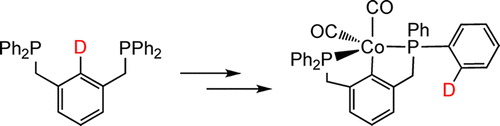
Mark A. Kent , Christopher H. Woodall, Mairi F. Haddow, Claire L. McMullin, Paul G. Pringle, Duncan F. Wass
Organometallics, 2014, 33, 5686-5692.
Correlations of the Structural Properties of a Complete R2PX Series (X = Hydrogen or Halogen)

Jonathan P. Hopewell, Claire L. McMullin, Paul G. Pringle, Timothy A. Shuttleworth, Christopher H. Woodall
Eur. J. Inorg. Chem., 2014, 1843–1849.
Unexpectedly High Barriers to M-P Rotation in Tertiary Phobane Complexes: PhobPR Behavior That Is Commensurate with tBu2PR
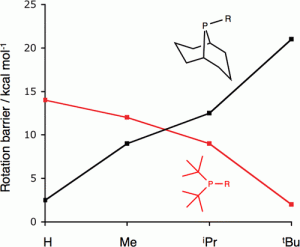
Julia M. Lister, Monica Carreira, Mairi F. Haddow, Alex Hamilton, Claire L. McMullin, A. Guy Orpen, Paul G. Pringle, Tom E. Stennett
Organometallics, 2014, 33, 702–714
A simple route to azaborinylphosphines: isoelectronic B–N analogues of arylphosphine ligands
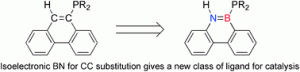
Jonathan A. Bailey, Mairi F. Haddow, Paul G. Pringle
Chem. Commun., 2014, 50, 1432-1434
Interplay of bite angle and cone angle effects. A comparison between o-C6H4(PR2)(CH2PR2‘) and o-C6H4(CH2PR2)(CH2PR2‘) as ligands for Pd-catalysed ethene hydromethoxycarbonylation.

T. Fanjul, G. Eastham, J. Floure, S. J. K. Forrest, M. F. Haddow, A. Hamilton, P. G. Pringle, A. G. Orpen, M. Waugh
Dalton Trans., 2013, 42, 100-115.
Stable Fluorophosphines: Predicted and Realized Ligands for Catalysis.
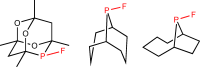 N. Fey, M. Garland, J. P. Hopewell, C. L. McMullin, S. Mastroianni, A. G. Orpen, P. G. Pringle,
Angew. Chem. Int. Ed., 2012, 51, 118-122
Regioselective B-Cyclometalation of a Bulky o-Carboranyl Phosphine and the Unexpected Formation of a Dirhodium(II) Complex.
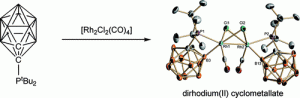
N. Fey, M. F. Haddow, R. Mistry, N. C. Norman, A. G. Orpen, T. J. Reynolds, P. G. Pringle
Organometallics, 2012, 31, 2907–2913.
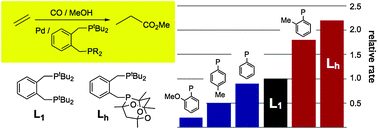
Efficient and chemoselective ethene hydromethoxycarbonylation catalysts based on Pd-complexes of heterodiphosphines o-C6H4(CH2PtBu2)(CH2PR2).
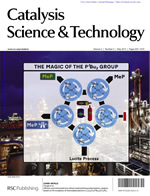 T. Fanjul, G. Eastham, M. F. Haddow, A. Hamilton, P. G. Pringle, A. G. Orpen, T. P. W. Turner, M. Waugh
Catal. Sci. Technol., 2012, 2, 937-950.
Diphosphanes derived from phobane and phosphatrioxa-adamantane: similarities, differences and anomalies.
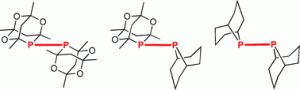 D. L. Dodds, J. Floure, M. Garland, M. F. Haddow, T. R. Leonard, C. L. McMullin, A. G. Orpen, P. G. Pringle
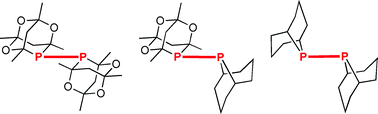
Dalton Trans., 2011, 40, 7137-7146.
Cage Phosphinites: Ligands for Efficient Nickel-Catalyzed Hydrocyanation of 3-Pentenenitrile.
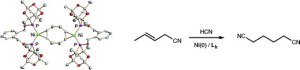 I. S. Mikhel, M. Garland, J. Hopewell, S. Mastroianni, C. L. McMullin, A. G. Orpen, P. G. Pringle
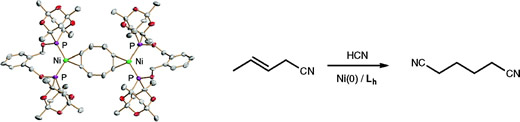
Organometallics 2011, 30, 974–985.
A water-soluble phosphite derived from sulfonated calix[4]arene. The remarkable stability of its rhodium complexes and two phase hydroformylation studies.
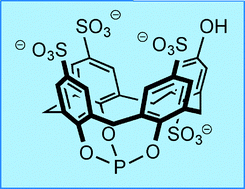
C. J. Cobley, P. G. Pringle
Catal. Sci. Technol., 2011, 1, 239-242.
Is restricted M–P rotation a common feature of enantioselective monophos catalysts? An example of restricted Rh–P rotation in a secondary phosphine complex.
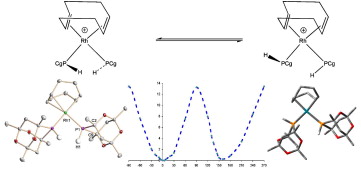
P. Jankowski, C. L. McMullin, I. D. Gridnev, A. G. Orpen, P. G. Pringle
Tetrahedron Asym., 2010, 21, 1206-1209.
Palladium Complexes of the Heterodiphosphine o-C6H4(CH2PtBu2)(CH2PPh2) Are Highly Selective and Robust Catalysts for the Hydromethoxycarbonylation of Ethene.
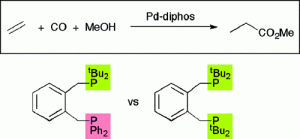 T. Fanjul , G. Eastham, N. Fey, A. Hamilton, P. G. Pringle, M. Waugh
Organometallics, 2010, 29, 2292-2305
Subtleties in asymmetric catalyst structure: the resolution of a 6-phospha-2,4,8-trioxa-adamantane and its applications in asymmetric hydrogenation catalysis.

J. Hopewell, P. Jankowski, C. L. McMullin, A. G. Orpen, P. G. Pringle
Chem Commun., 2010, 46, 100-102.
Anatomy of Phobanes. Diastereoselective Synthesis of the Three Isomers of n-Butylphobane and a Comparison of their Donor Properties.
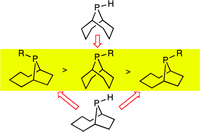
M. Carreira, M. Charernsuk, M. Eberhard, N. Fey, R. van Ginkel, A. Hamilton, W. P. Mul, A. G. Orpen, H. Phetmung, P. G. Pringle
J. Am. Chem. Soc , 2009, 131, 3078-3092.
Stereoelectronic effects in a homologous series of bidentate cyclic phosphines. A clear correlation of hydroformylation catalyst activity with ring size.
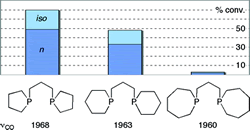
M. F. Haddow, A. J. Middleton, A. G. Orpen, P. G. Pringle, R. Papp
Oxidative Dehydrogenation of Tris(o-isopropylphenyl)phosphines by Platinum Complexes.

A. Baber, C. Fan, D. W. Norman, A. G. Orpen, P. G. Pringle, R. L. Wingad
Organometallics, 2008, 27, 5906-5910.
General Routes to Alkyl Phosphatrioxaadamantane Ligands.
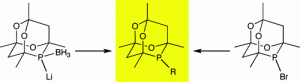
J. H. Downing, J. Floure, K. Heslop, M. F. Haddow, J. Hopewell, M. Lusi, H. Phetmung, A. G. Orpen, P. G. Pringle, R. I. Pugh, D. Zambrano-Williams
Organometallics, 2008, 27, 3216–3224.
Bidentates versus Monodentates in Asymmetric Hydrogenation Catalysis: Synergic Effects on Rate and Allosteric Effects on Enantioselectivity.
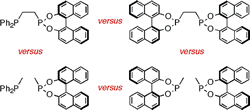
D. W. Norman, C. A. Carraz, D. J. Hyett, P. G. Pringle, J. B. Sweeney, A. G. Orpen, H. Phetmung, R. L. Wingad
J. Am. Chem. Soc. 2008, 130, 6840-6847.
A simple entry into nido-C2B10 clusters: HCl promoted cleavage of the C–C bond in ortho-carboranyl diphosphines.
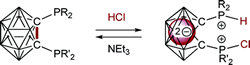
J. P. H. Charmant, M. F. Haddow, R. Mistry, N. C. Norman, A. G. Orpen, P. G. Pringle
Dalton Trans, 2008, 1409-1411.
New insights into the mechanism of asymmetric hydrogenation catalysed by monophosphonite-rhodium complexes.
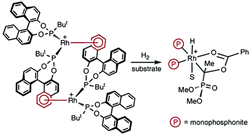
I. D. Gridnev, C. Fan, P. G. Pringle
Chem. Commun., 2007, 1319-1321.
Ligand stereoelectronic effects in complexes of phospholanes, phosphinanes, and phosphepanes and their implications for hydroformylation catalysis.
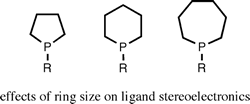
R. A. Baber, M. F. Haddow, A. J. Middleton, A. G. Orpen, P. G. Pringle, A. Haynes, G. L. Williams, R. Papp
Organometallics, 2007, 26, 713-725.
Synthesis and reactivity of dichloroboryl complexes of platinum(II).
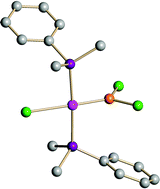
J. P. H. Charmant, C. Fan, N. C. Norman, P. G. Pringle
Stereospecific diphosphination of activated acetylenes: a general route to backbone-functionalized, chelating 1,2-diphosphinoethenes.

D. L. Dodds, M. F. Haddow, A. G. Orpen, P. G. Pringle, G. Woodward,
Organometallics, 2006, 25, 5937-5945.
Nitrogen-linked diphosphine ligands with ethers attached to nitrogen for chromium-catalyzed ethylene tri- and tetramerizations.
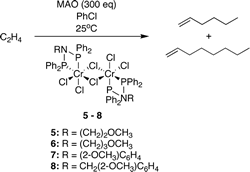
P. R. Elowe, C. McCann, P. G. Pringle, S. K. Spitzmesser, J. E. Bercaw
Organometallics, 2006, 25, 5255-5260.
Allosteric effects in asymmetric hydrogenation catalysis? Asymmetric induction as a function of the substrate and the backbone flexibility of C1-symmetric diphosphines in rhodium-catalysed hydrogenations.

R. A. Baber, J. G. de Vries, A. G. Orpen, P. G. Pringle, K. von der Luehe
Dalton Trans., 2006, 4821-4828.
Chiral palladium bis(phosphite) PCP-pincer complexes via ligand C–H activation.

R. A. Baber, R. B. Bedford, M. Betham, M. E. Blake, S. J. Coles, M.F. Haddow, M. B. Hursthouse, A. G. Orpen, L. T. Pilarski, P. G. Pringle, R. L. Wingad
Chem. Commun., 2006, 3880-3882.
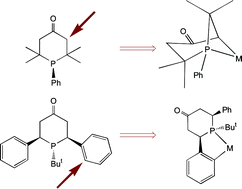
Bulky 4-phosphacyclohexanones: diastereoselective complexations, orthometallations and unprecedented [3.1.1]metallabicycles.
R. Doherty, M. F. Haddow, Z. A. Harrison, A. G. Orpen, P. G. Pringle, A. Turner, R. L. Wingad
Dalton Trans., 2006, 4310-4320.

Ketone H2-hydrogenation catalysts: ruthenium complexes with the headphone-like ligand bis(phospha-adamantyl)propane.
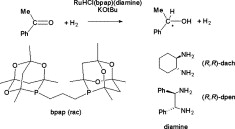
A. Hadovic, A. J. Lough, R. H. Morris, P. G. Pringle, D. E. Zambrano-Williams
Inorg. Chim. Acta, 2006, 359, 2864-2869.
Nine-membered trans square-planar chelates formed by a bisbi analogue.

M. R. Eberhard, K. M. Heslop, A. G. Orpen, P. G. Pringle
Organometallics, 2005, 24, 335-337.
Separation of phobane isomers by selective protonation.

M. R. Eberhard, E. Carrington-Smith, E. E. Drent, P. S. Marsh, A. G. Orpen, H. Phetmung, P. G. Pringle
Adv. Synth. Catal., 2005, 347, 1345-1348.
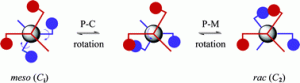
Special effects of ortho-isopropylphenyl groups. Diastereoisomerism in platinum(II) and palladium(II) complexes of helically chiral PAr3 ligands.
R. A. Baber, A. G. Orpen, P. G. Pringle, M. J. Wilkinson, R. L. Wingad
Phenylphosphatrioxa-adamantanes: bulky, robust, electron-poor ligands that give very efficient rhodium(I) hydroformylation catalysts.
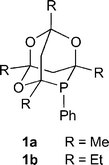
R. A. Baber, M. L. Clarke, K. M. Heslop, A. C. Marr, A. G. Orpen, P. G. Pringle, A. Ward, D. E. Zambrano-Williams
Dalton Trans., 2005, 1079-1085.
The electron-poor phosphines P{C6H3(CF3)2-3,5}3 and P(C6F5)3 do not mimic phosphites as ligands for hydroformylation. A comparison of the coordination chemistry of P{C6H3(CF3)2-3,5}3 and P(C6F5)3 and the unexpectedly low hydroformylation activity of their rhodium complexes
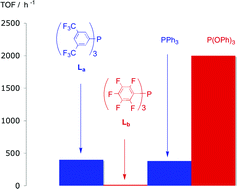
M. L. Clarke , D. Ellis, K. L. Mason, A. G. Orpen, P. G. Pringle, R. L. Wingad, D. A. Zaher, R. T. Baker
Dalton Trans., 2005,1294-1300.
Bulky triarylarsines are effective ligands for palladium catalysed Heck olefination.
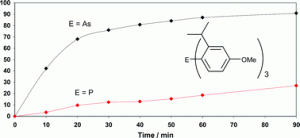
R. A. Baber, S. Collard, M. Hooper, A. G. Orpen, P. G. Pringle, M. J. Wilkinson, R. L. Wingad
 Pringle Group